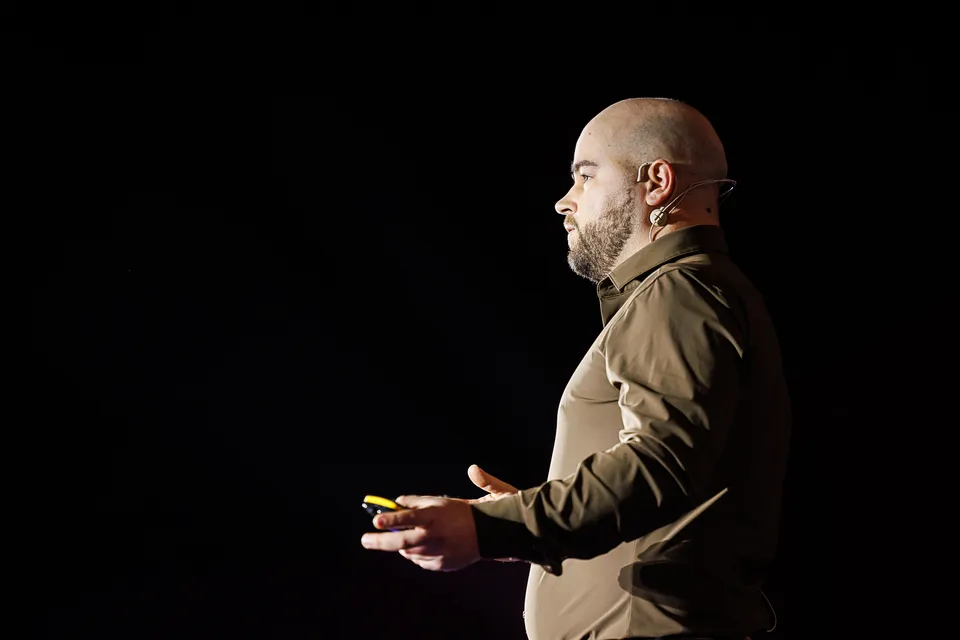
Angular and Nx workshops for enterprise teams

Your team is not short of talent. It is short of shared rules.

Hands-on workshops on enterprise Angular patterns, Nx monorepos, AI-assisted development and UI libraries, run on your own codebase. One or two days that change how your team works, not a slide deck they forget by Friday.

What the numbers say about how teams learn

None of these numbers are ours. They come from the Angular team, from LinkedIn and from Stack Overflow, and together they describe the team that has not trained together in a while.

  1. 79%

    of Angular developers are on the latest two major versions, which leaves one team in five further behind. Each of those versions carries a year of change: signals, standalone, zoneless, signal forms.

    Angular developer survey 2024, close to 10,000 responses

  2. 94%

    of employees say they would stay at a company longer if it invested in their learning. For developers, that investment is training on the stack they use every day, not a course library nobody opens.

    LinkedIn Workplace Learning Report, 2018

  3. 76%

    of professional developers use or plan to use AI tools in their work, while fewer than half trust the output. Everyone uses them; almost no team has agreed on the rules.

    Stack Overflow Developer Survey 2024

Put those together and you get the state of most Angular teams today: developers who learned different versions of the framework, use AI tools in their own way, and review each other's code against rules that exist only in their heads. The codebase is where those differences land, one pull request at a time. And the developers who notice it first are the ones who leave first.

Roberto’s knowledge of Angular is exceptionally deep. It’s clear in everything he does that he understands exactly what is happening and why.

Ferdi Havenaar Manager IT Web & App, Vattenfall

Twelve signs your team is learning on production

Each of these is a symptom of missing shared rules, not of missing talent. Tick the ones you recognise.

Why most training changes nothing, and what does

We have given workshops at conferences and inside companies for years. The ones that changed a team had four things in common.

  • Slides do not survive contact with your codebase.

    A course built on a demo app teaches how the demo app should be structured. Your app has an ERP integration, a legacy module nobody touches and a deadline. Every exercise in our workshops is built from your own repository, so the answer to how do we apply this is worked out in the room.

    Do this today. Next time someone on your team follows a course, ask them to apply one thing to a real module within a week and demo it to the team. That single step is most of the difference.

  • Knowledge without rules evaporates.

    A team can agree on a pattern on Thursday and drift from it by the next sprint, because agreement lives in memory and memory is busy. What survives is a decision written down and a lint rule that fails the build. Every workshop we give ends with both.

    Do this today. Pick one convention your team argues about most. Write the decision down today, add a lint rule for it tomorrow. Repeat once a month.

  • AI multiplies whatever conventions you have, including the bad ones.

    Coding agents learn from the code in front of them. If your codebase has three ways of managing state, the agent will pick one at random and add a fourth. Teams that wrote down their rules get consistent AI output; teams that did not get faster inconsistency.

    Do this today. Put a short instructions file for coding agents in your repository this week, with your five non-negotiable rules. Even five lines change what the tools produce.

  • The team is the unit of learning, not the individual.

    Sending one developer to a conference creates a translator: one person who knows, explaining to people who did not see it. Training the whole team together creates a shared vocabulary in two days, and shared vocabulary is what makes code review fast.

    Do this today. Book learning per team, not per person. When budgets force a choice, one workshop for eight people beats eight conference tickets.

Many of the choices Roberto made when he joined still contribute today to the stability and quality of the project.

Peter Nieuwenhuyse Software architect & Angular coach

The workshops

Four fixed topics and one we build around your team. One or two days, on site or remote. Twelve seats are included and larger groups are welcome, per seat or as parallel groups. Each workshop is prepared on your own codebase and ends with decisions your build can enforce.

Enterprise Angular Patterns

Architecture • Angular

Enterprise Angular Patterns

For teams whose Angular app has grown faster than its structure. We find where it hurts, including the places you have stopped noticing, and show you the way out.

  • Every change breaks something else: bringing dependency rules to a grown codebase
  • State scattered everywhere, and the bugs nobody can reproduce
  • The app feels slow but nothing looks wrong: finding the real cause
  • Signals, standalone and zoneless adopted in place, with no big-bang rewrite
  • Tests that pass while production breaks: what to test at which level
  • Your own codebase, reviewed together: the problems you have stopped seeing

You leave with A written set of architecture rules for your app, the lint configuration that enforces them, and a prioritised list of the places in your code that break them today.

Book this workshop
Nx Monorepo Enablement

Platform • Nx

Nx Monorepo Enablement

For teams whose builds and CI keep getting slower, and whose apps have quietly grown into each other.

  • An hour of CI for a one-line change: affected commands and caching that only run what changed
  • Apps and libraries that import each other freely: module boundaries the build enforces
  • Moving your existing apps into one workspace in stages, while releases keep shipping
  • Nx Cloud, remote caching and distributed tasks for pipelines that are fast and stay fast
  • A look at your own project graph: the hidden coupling and duplicated code you did not know were there

You leave with Module boundary rules and tags applied to your workspace, a CI configuration that only builds what changed, and a staged plan for the apps that are not in the workspace yet.

Book this workshop
Using AI Effectively in Angular and Nx Projects

AI • Productivity

Using AI Effectively in Angular and Nx Projects

For teams where AI use is spreading unevenly: some developers fly, others distrust every suggestion, and nobody has agreed on the rules.

  • Why AI code drifts from your conventions, and how to stop it
  • Setting up coding agents such as Claude Code or Copilot with your project graph, conventions and guardrails
  • Shared instructions and skills so everyone benefits, not just the early adopters
  • Refactors, tests and migrations with AI, while your team stays in control
  • The risks already in your workflow today, and the policies that close them

You leave with Shared agent instructions committed to your repository, a review checklist for AI-assisted pull requests, and a written policy your team agreed on together.

Book this workshop
Building Enterprise-Grade UI Libraries

UI Libraries • Angular

Building Enterprise-Grade UI Libraries

For teams whose shared components get copied instead of reused, and where every brand tweak turns into a fork.

  • Why teams fork your components instead of using them, and the fix
  • The same button built four times: deciding what belongs in the library
  • Design tokens so a new brand does not mean a new copy of the library
  • The accessibility gaps you cannot see: keyboard, focus and screen readers
  • One release breaks every consumer: safe versioning in an Nx workspace
  • Your library, reviewed: the hidden coupling that keeps teams from using it

You leave with A component inventory of your library with what to keep, merge and remove, a token structure for theming, and a versioning and release process the consumers can rely on.

Book this workshop

Tailored • Your topic

A workshop built around your team

For teams whose problem does not fit a catalogue entry. We start from a call about what is actually slowing you down, read your codebase, and build the workshop around that: one topic from the list, a mix of several, or something nobody has written a course for yet.

  • An intake call to find the real problem, not the one in the ticket
  • Topics combined from the catalogue or built from scratch: state, performance, testing, migrations, tooling, whatever your code needs
  • Every example and exercise taken from your own repository
  • Format chosen with you: one day, two days, or a series of half-days between sprints
  • Decisions written down and enforced in the build, like every other workshop

You leave with A workshop that exists only for your team, with the same deliverables as the others: written decisions, the lint rules that enforce them, and a list of the places in your code that break them today.

Plan a tailored workshop

How a workshop runs

Preparation is where a workshop is won. We spend more time reading your code before the day than we spend in the room.

What your team leaves with

  • Exercises and examples built from your own codebase, yours to keep
  • A written decision record: the rules the team agreed on and why
  • Lint rules and module boundaries that enforce those rules in the build
  • A ranked list of the places in your code that break the rules today
  • The recording and the material, so new hires get the same story later
  • Thirty days of follow-up questions

Roberto delivers quickly, makes well-considered decisions, and actively contributes to architectural discussions. I can strongly recommend him as a full-stack developer.

Ferdi Havenaar Manager IT Web & App, Vattenfall
Book workshop

No obligation. A short call to see whether we are the right fit.

Three ways to do this

Pick by how far you want the change to go: agreed, enforced, or measured.

  • Minimum

    The least any team maintaining an Angular product should do once a year.

    One day, twelve seats included

    €2,499 fixed, excl. VAT

    One workshop from the catalogue, or one built around your team, prepared on your own codebase and closed with the decisions written down.

    • Intake call and a read of your repository beforehand
    • One full day, on site or remote
    • Exercises built from your own code, not slides
    • A one-page decision record the team agreed on
    • Implementing the rules in lint and CI together
    • Follow-up after the day
    Ask about Minimum
  • Advanced

    For teams with a goal to hit, or a whole department to bring onto the same rules: an upgrade, a migration, CI under ten minutes.

    Two days, then one quarter, any group size

    On quote Standard at €3,749, the quarter priced per goal and group

    The Standard workshop followed by three months of enablement towards one measurable goal your team picks, for as many developers as you have.

    • Everything in Standard
    • Unlimited seats, run as parallel groups so every session stays hands-on
    • A measurable goal agreed at the start, reviewed at the end
    • Monthly half-day sessions with the team
    • Review of pull requests that touch the agreed rules
    • A second workshop topic in month three
    Ask about Advanced

Minimum and Standard are fixed prices for twelve seats, excl. VAT, on site or remote; travel outside the Netherlands is added at cost. Each extra seat is €100 per workshop day, and larger groups run in parallel. Advanced is quoted per goal and group size. Combining topics across days is common; we will tell you honestly what fits in the time.

From the people we have worked with

Every engagement is led by founder Roberto Heckers. These are the words of people who worked with him.

  • No task was too difficult for Roberto. He knows Angular very well, and I would highly recommend him for your Angular project.

    Nico Vandenbroucke IT-Directeur, Wit-Gele Kruis West-Vlaanderen
  • Roberto from Heckers Software joined our team. Not by immediately bulldozing through the code, but by carefully and thoughtfully paving the right paths with insight and calm.

    Peter Nieuwenhuyse Software architect & Angular coach
  • Roberto was a great addition to the team for several years, able to tackle all the challenges you can encounter in a technology that is continuously improving.

    Marc Caessens Senior Software Program Manager, Marel

Questions we hear before every workshop

Our developers are senior. Is this too basic for them?

The workshops are for teams that already ship Angular in production; that is the assumption behind every exercise. Senior teams get the most out of them, because the work happens on their own code and the discussion is about their own decisions, not about the basics.

On site or remote?

Both work. On site is better for the whole-team discussions, remote is easier to schedule across locations. For two-day workshops we prefer on site for at least one of the days.

How many people?

As many as you have. Twelve seats are included in every tier; each extra seat is €100 per workshop day, excl. VAT. Above roughly fifteen people we split into parallel groups, so the exercises stay hands-on and each group can work on its own part of the codebase. Bringing a whole department onto the same rules is what the Advanced tier is for.

Do we need to prepare anything?

Read access to the repository two weeks before, an intake call, and a room or a video link. We do the rest. Attendees should bring a laptop that can run the project.

Can we combine topics?

Yes, and most two-day workshops do. Enterprise Angular Patterns and Nx Monorepo Enablement pair naturally; so do the AI workshop and any of the others. We will say honestly what fits in the time.

Which language?

English or Dutch, whichever the team prefers. The material is in English.

Tell us about your project

An audit, a workshop, a new application or a codebase that needs rescuing. Describe where you are and we will tell you honestly whether we can help.

  1. You get a personal reply from Roberto, not an autoresponder.
  2. We schedule a short call to understand your situation and goals.
  3. You receive a clear proposal with scope, timeline and price.

Prefer email? Write to roberto@heckerssoftware.com

It was a pleasure working with Heckers Software and having Roberto on our team.

Nico Vandenbroucke IT-Directeur, Wit-Gele Kruis West-Vlaanderen